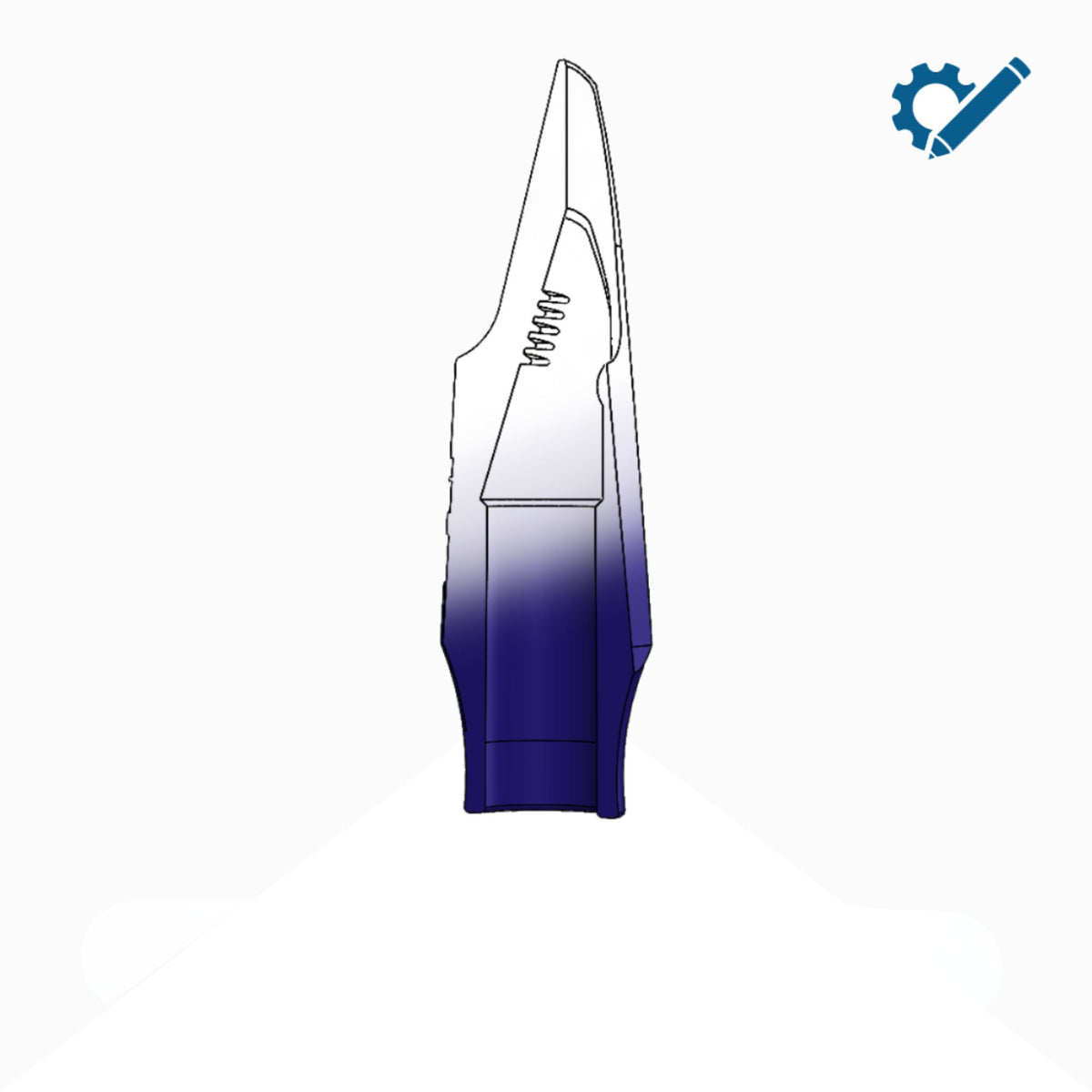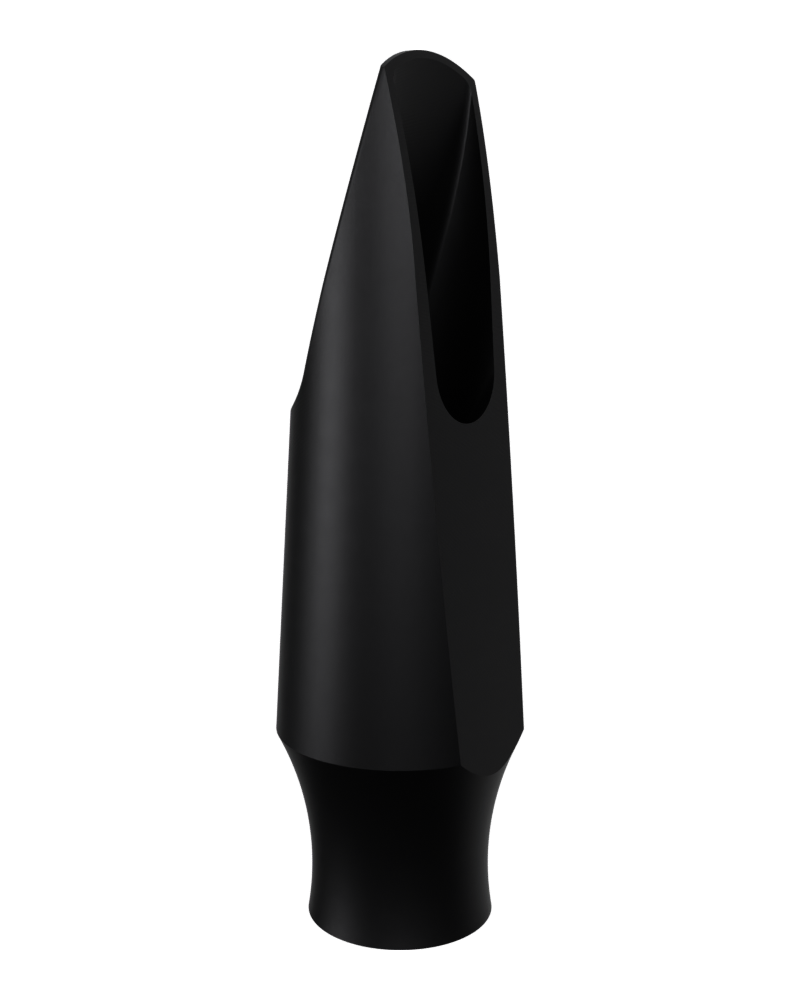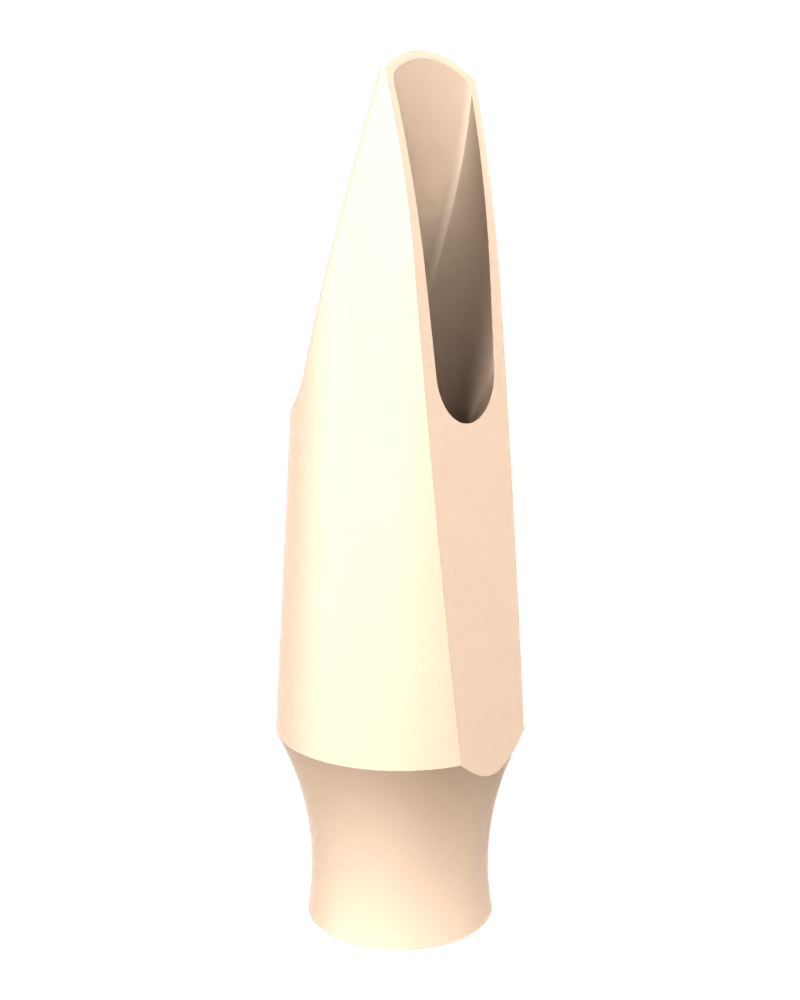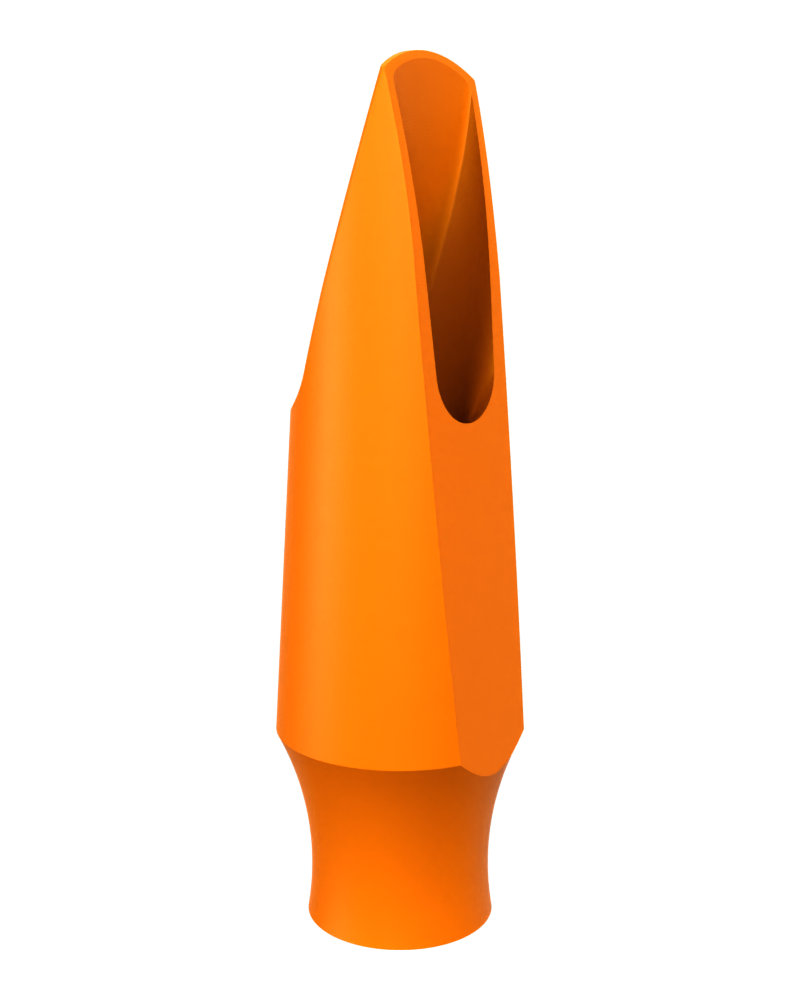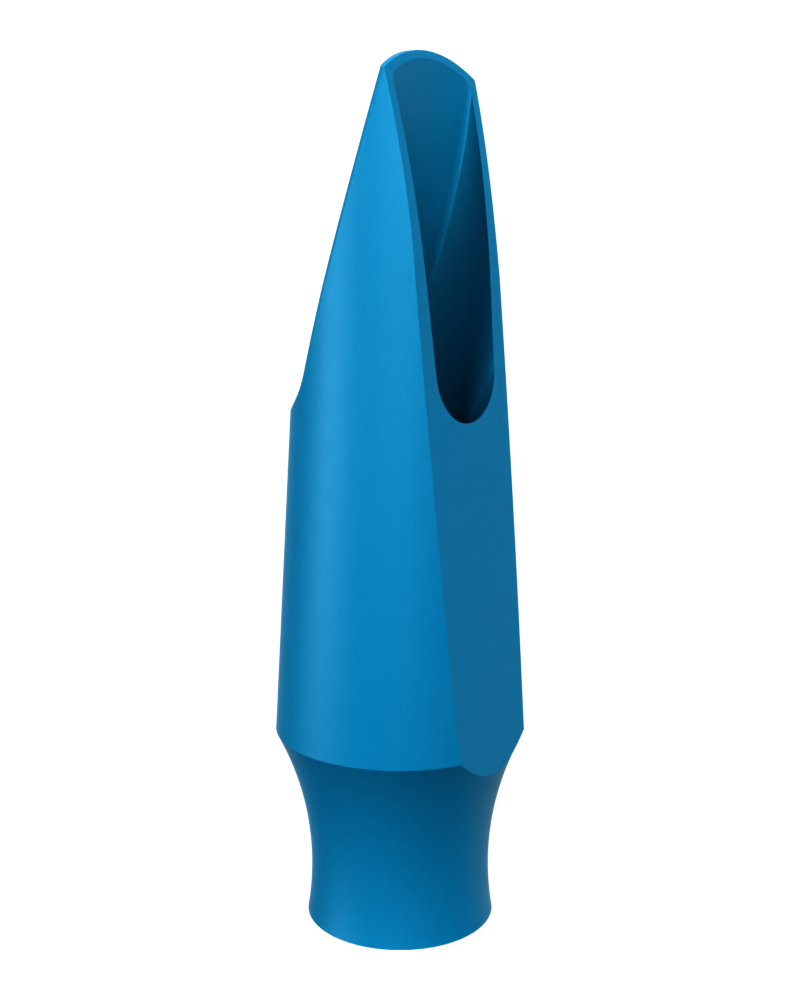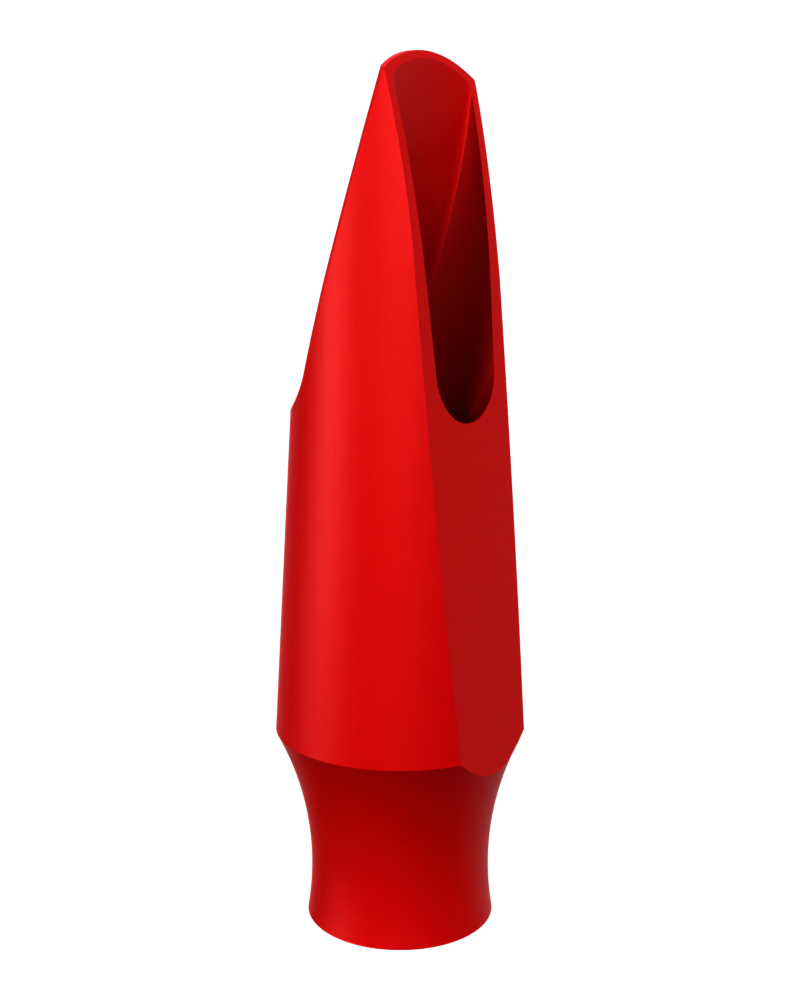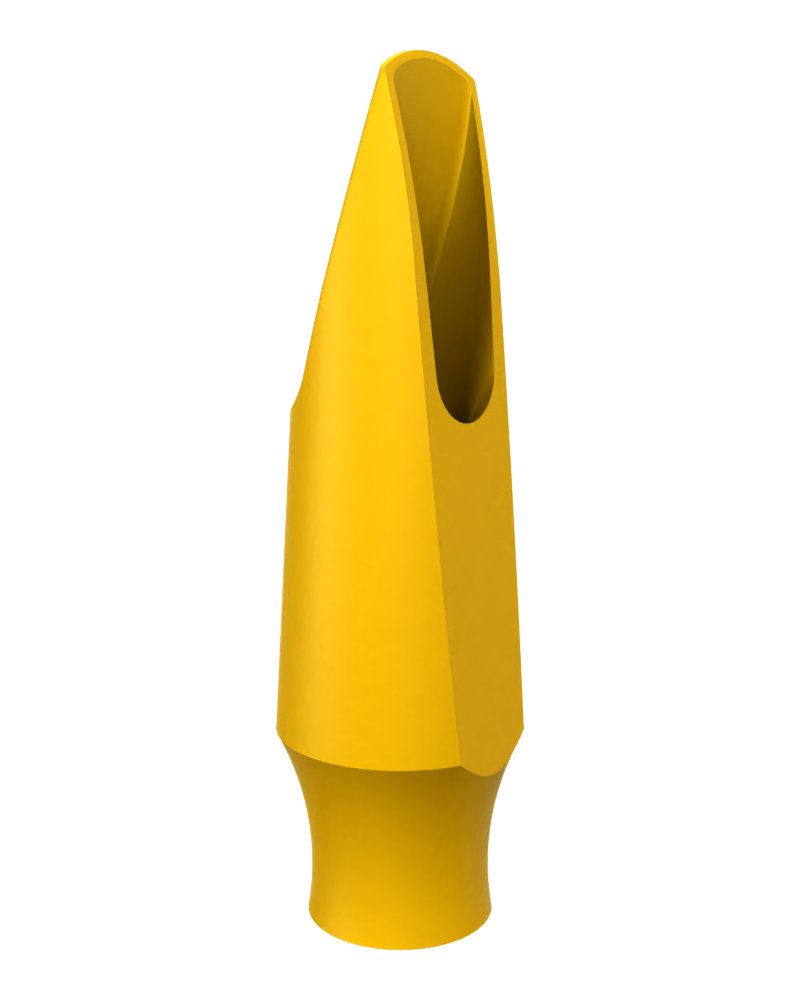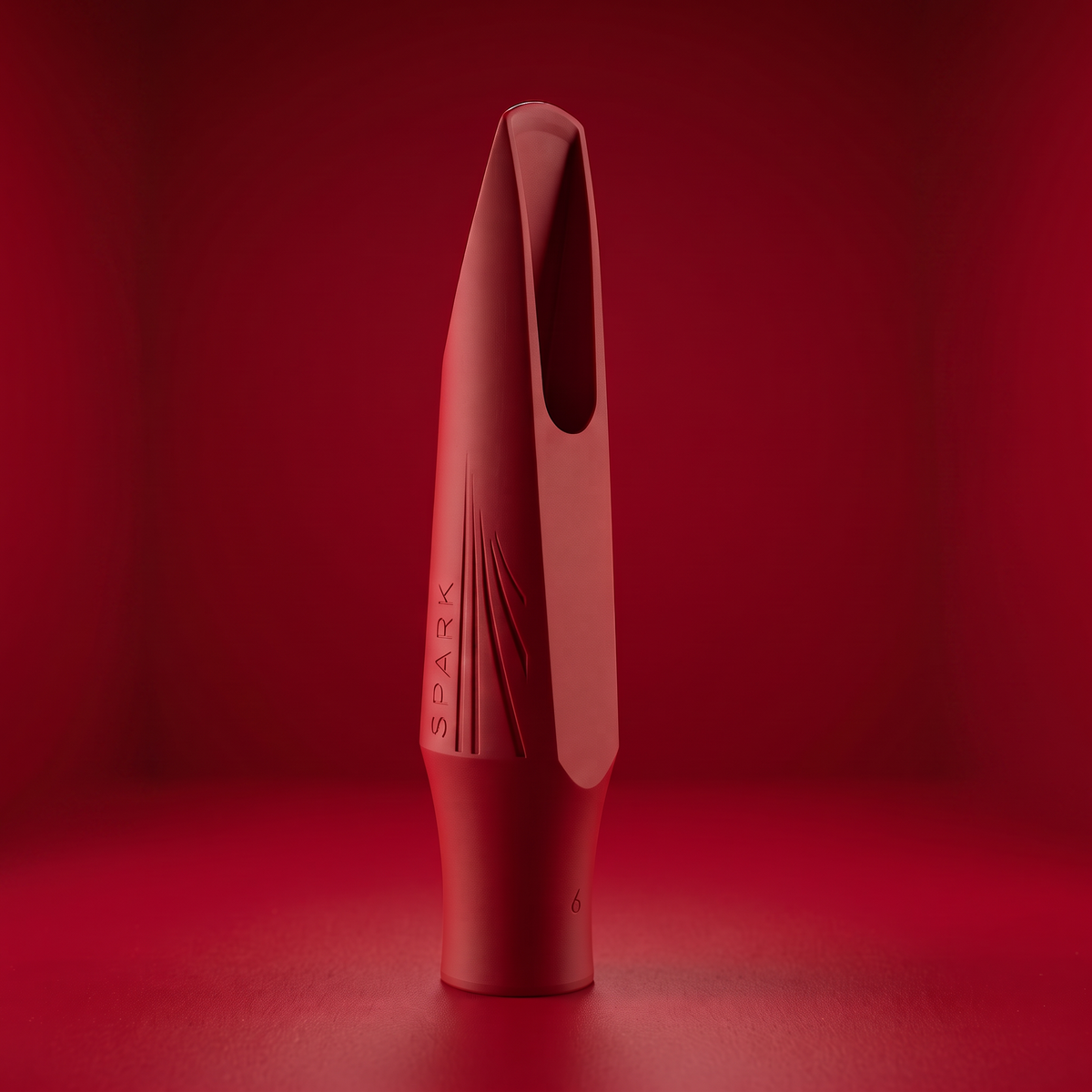








The baffle is the part of the mouthpiece located just behind the reed: it is the surface that the air, vibrated by the reed, strikes directly, therefore its geometry is crucial. The baffle is the most important geometric element of the mouthpiece when it comes to shaping the sound, and it is primarily responsible for the acoustic properties of the mouthpiece and the comfort of play.
The impact of the baffle geometry on the sound
There are several geometries for saxophone mouthpiece baffles. The most common are:

In a simplified statement, the closer the baffle is to the reed, the more powerful and bright the sound will be. Therefore, with a straight baffle we get a very dark and soft sound (or smothered, with air inside) whilst a high step baffle will produce a very metallic and aggressive tone. An intermediate baffle will give a more balanced tone, with more flexibility but the mouthpiece will be more generic. The baffle does not only play on the brilliance of the mouthpiece, but it also determines the comfort of play, and in particular the resistance of the mouthpiece.
When Adolphe Sax invented the saxophone, the mouthpiece he imagined had a very low straight baffle coupled with a very large chamber. This mouthpiece, although quite difficult to play, created a rounded sound suitable for classical music. It is only at the beginning of the 20th century that some saxophonists had the idea of modeling their mouthpieces by adding a resin paste inside the mouthpiece to raise the baffle and create new sounds: these higher baffles amplified the higher frequencies, to the point of saturation (or "buzz").

Modified mouthpieces are not ideal as the volume of the cavity becomes much smaller, thus destabilising the tuning of the mouthpiece. Since then, mouthpiece designers have been creating mouthpieces with higher baffles, adapted to the requirements of jazz saxophonists. In particular, metal mouthpieces like Guardala or Dukoff have very long and very high baffles, which give them their metallic sound (also understand that the metallic sound does not come from the metal). This is also the case for Jumbo Java, Vandoren's ebonite model.
The different types of saxophone mouthpiece baffle
The shape of the baffle changes the brightness, the power and the resistance of a mouthpiece. These are the five main baffle types we use at Syos, with examples from our range. We also use other variants (circular baffle, ridges...), described in our full guide to Syos baffles.
Straight baffle
A straight baffle is a straight line between the tip and the chamber. It is the most resistant type of baffle and gives a dark, soft sound. We use it mostly for classical mouthpieces, like Sarah Dunbar's signature mouthpiece for alto. Most clarinet mouthpieces also have straight baffles.
Step baffle
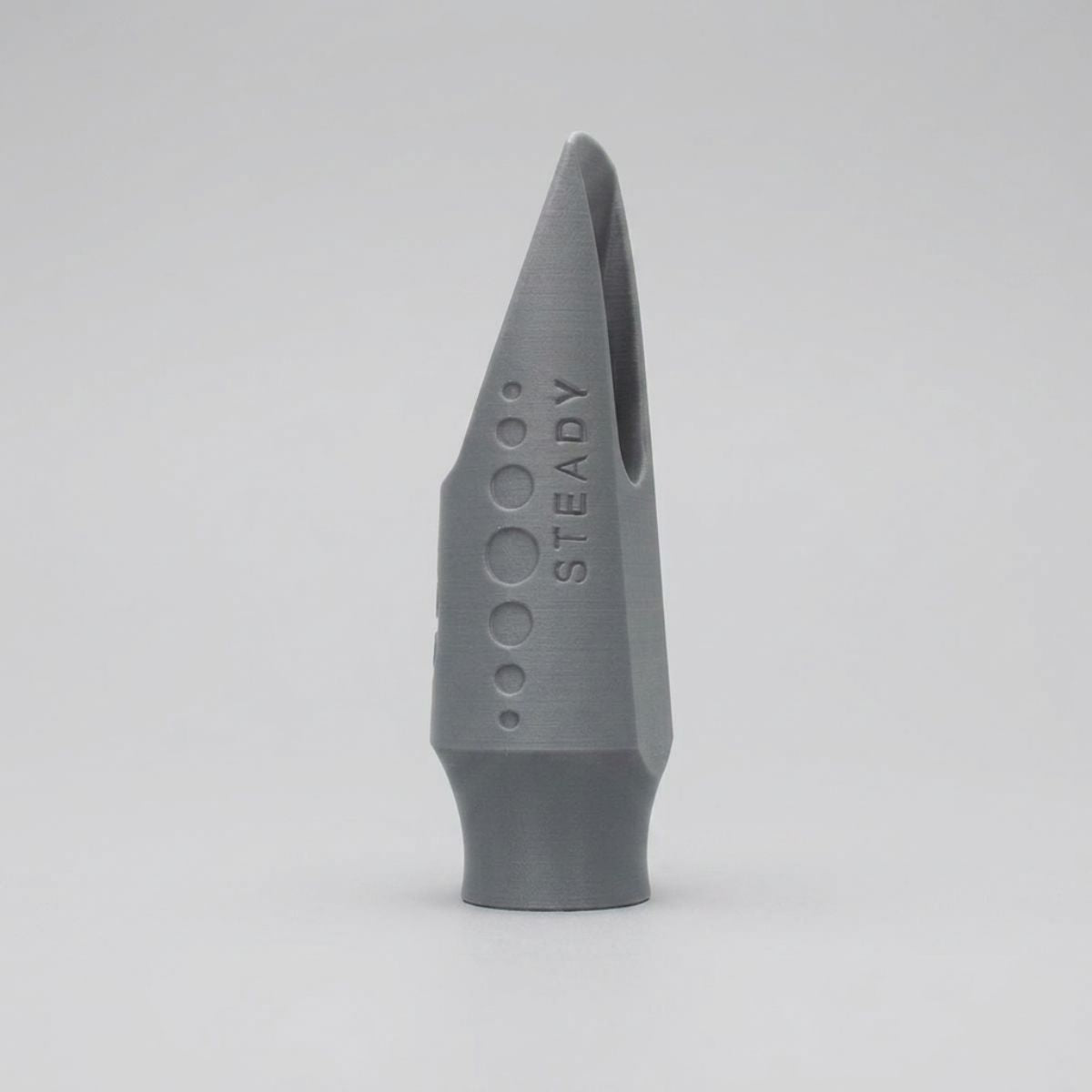
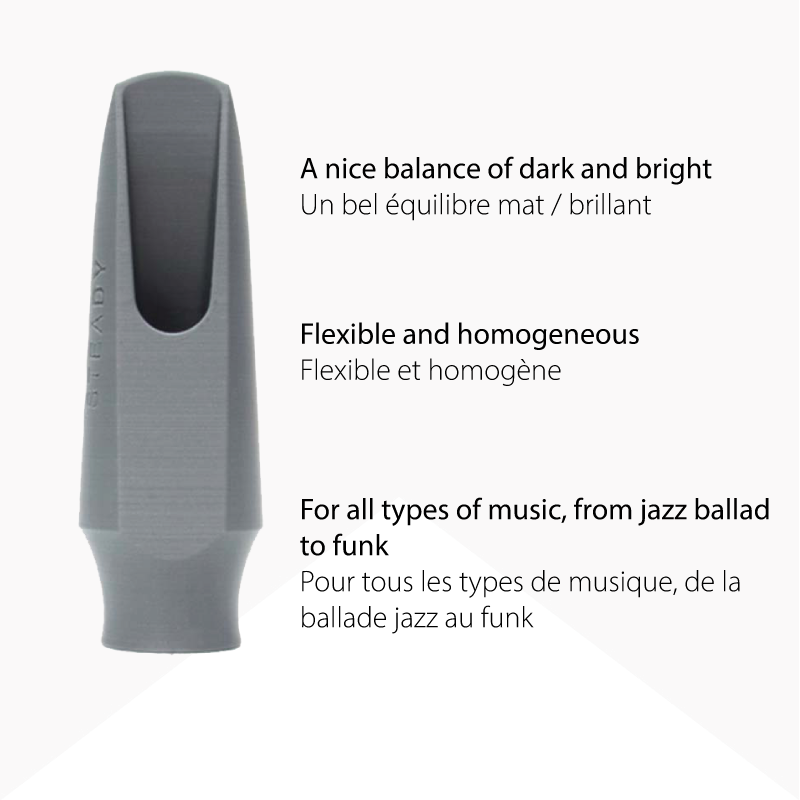
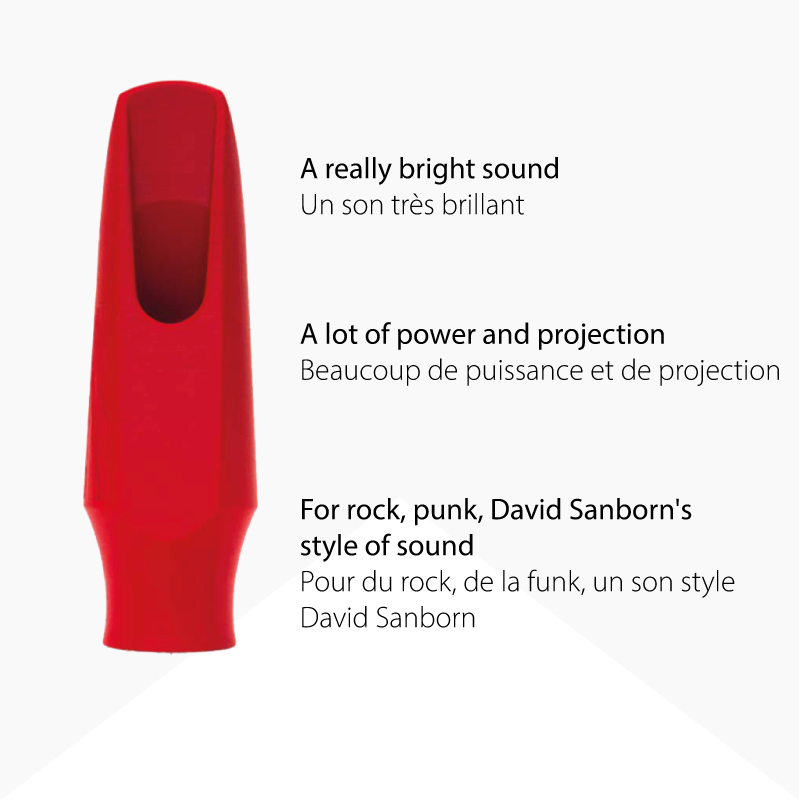
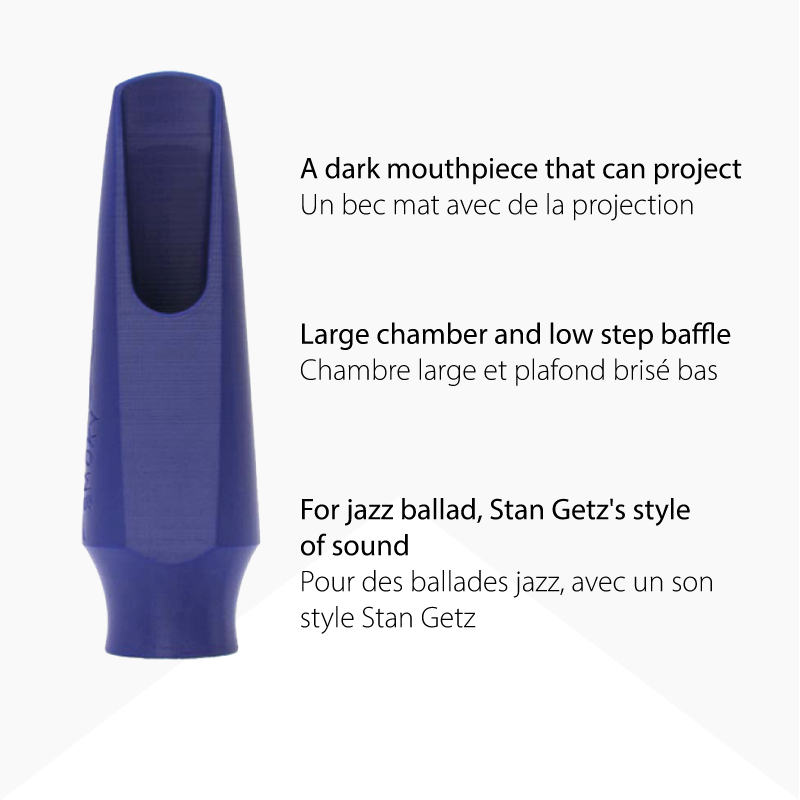
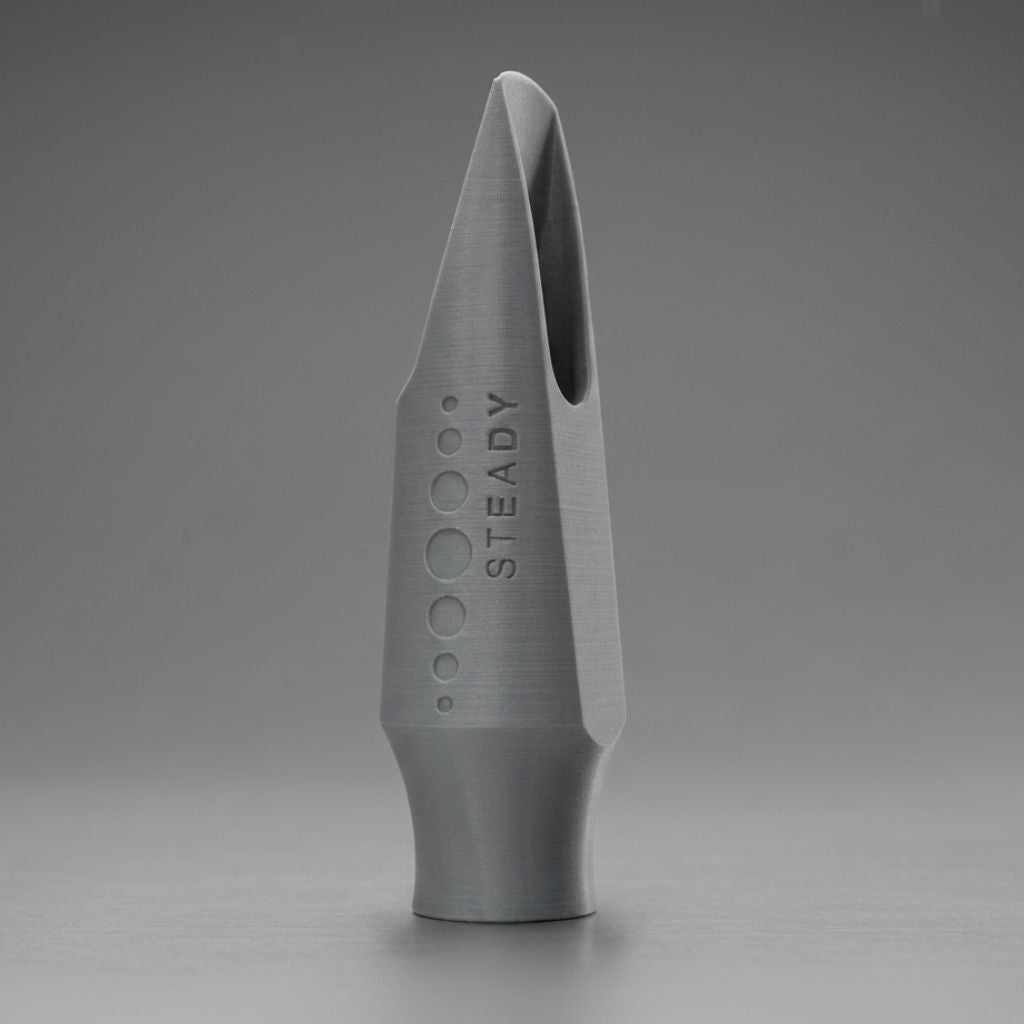
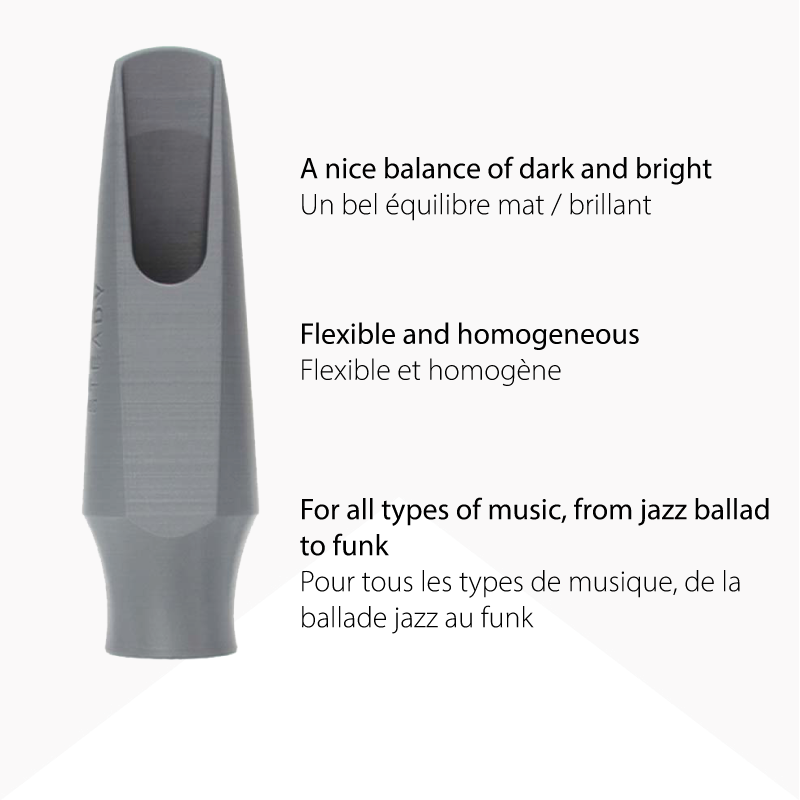
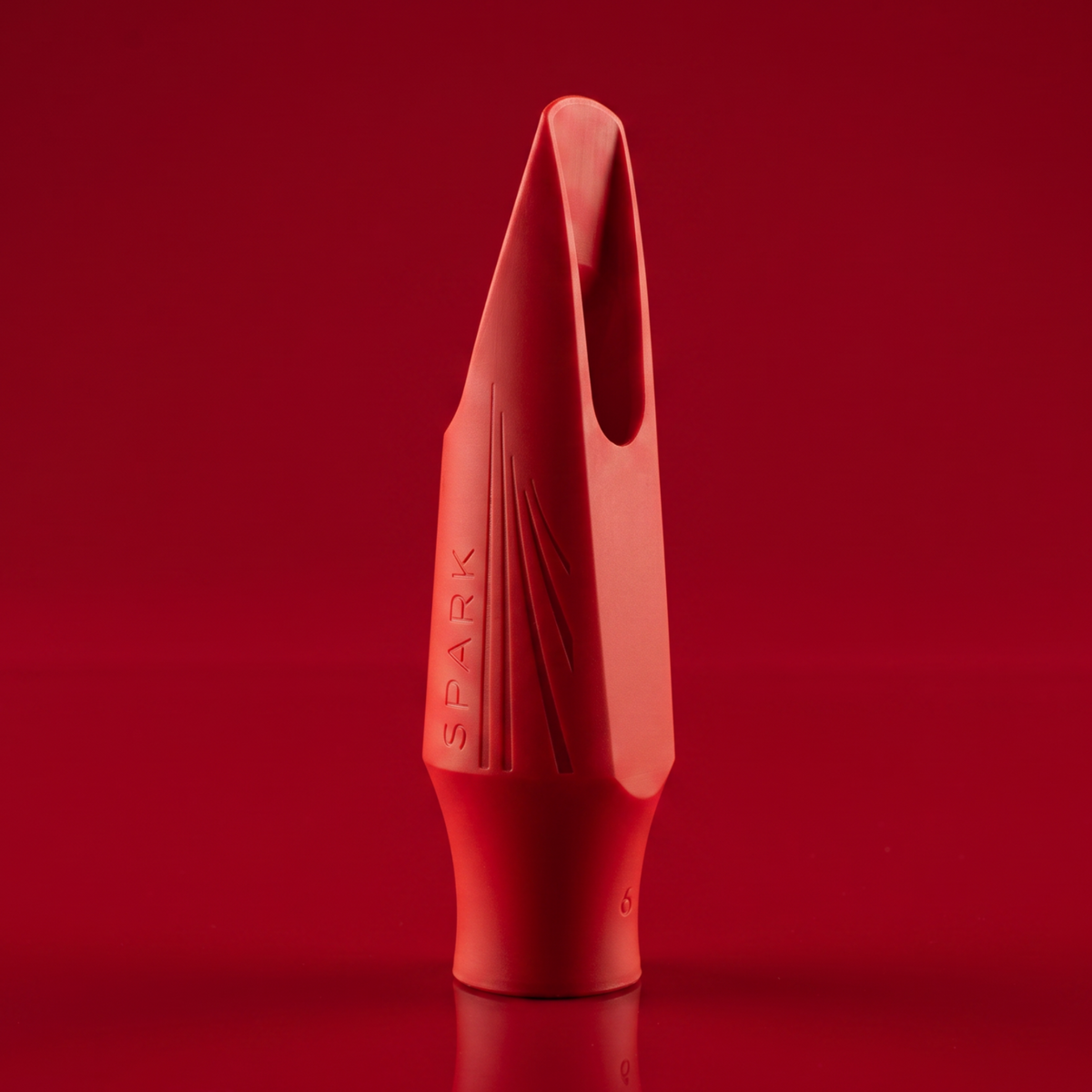
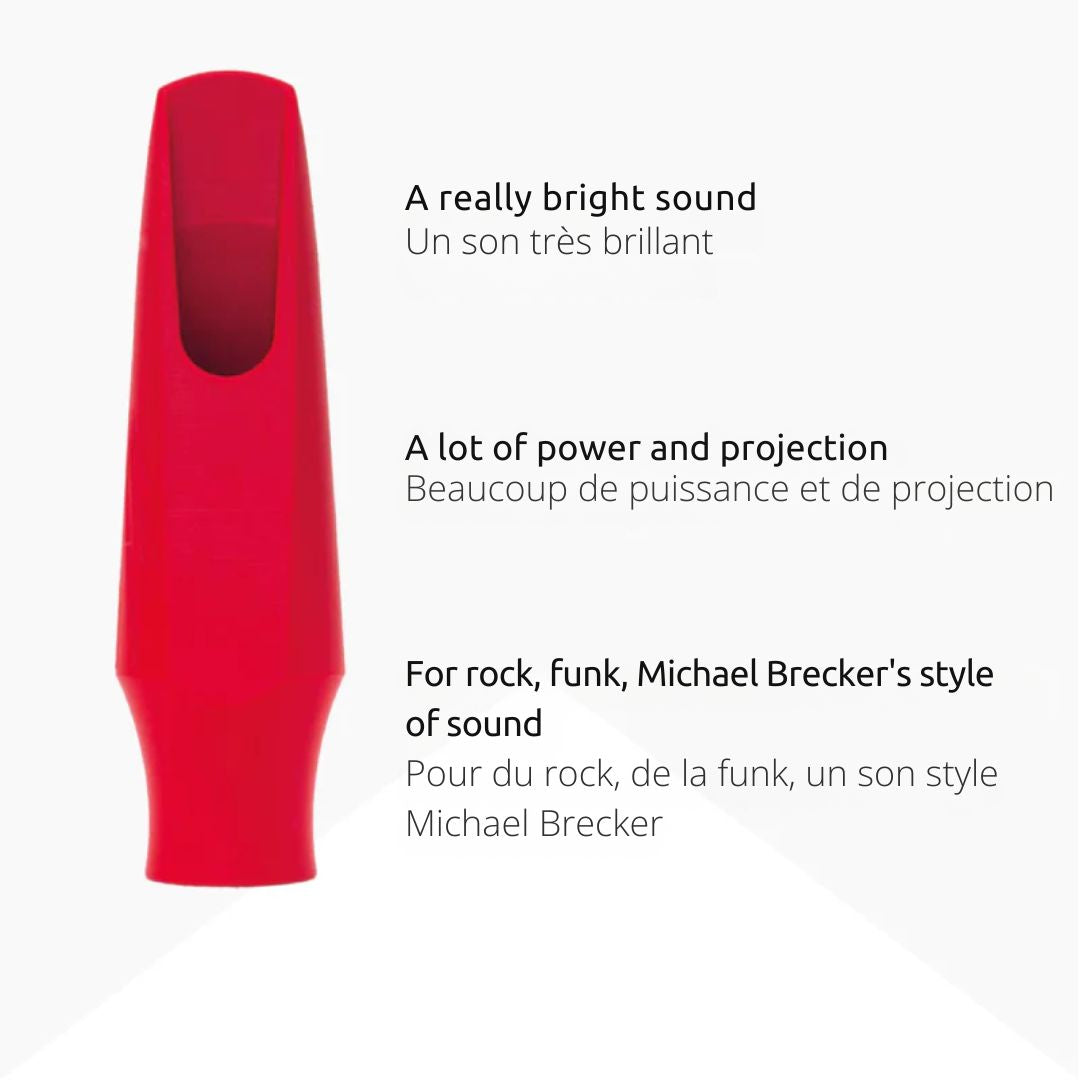
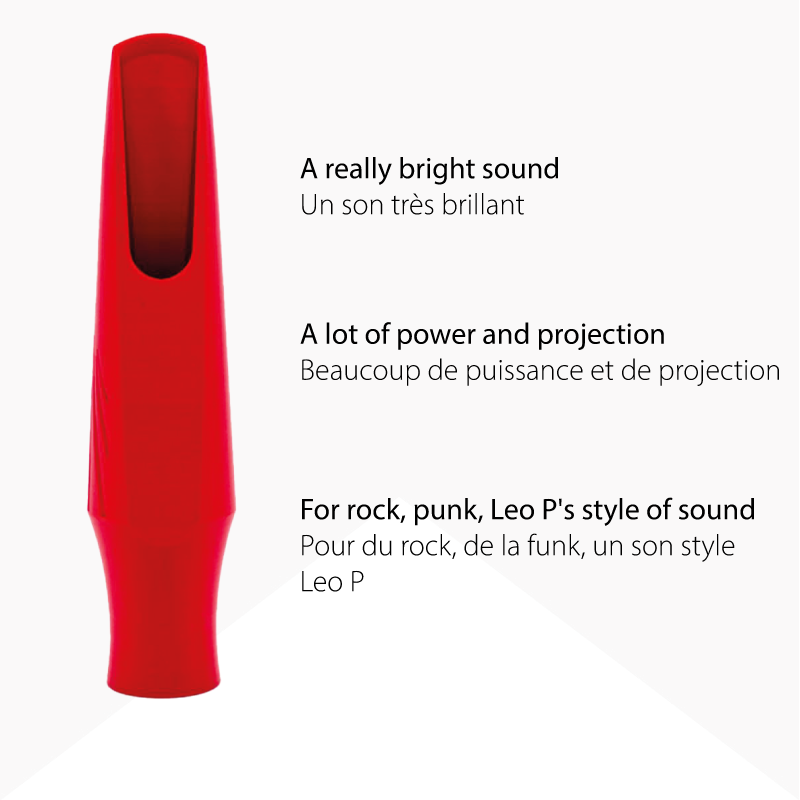
A step baffle is made of two straight lines. Depending on their measurements, it can make a mouthpiece really bright and powerful, or dark. The longer and the closer to the reed the first line is, the brighter and more powerful the mouthpiece: this is the high step baffle, used on Scott Paddock's signature for tenor and on the Spark for tenor. Kept low, it gives a dark mouthpiece with a nice projection. A medium step with a medium chamber gives a balanced mouthpiece, like the Steady for tenor.
⚠️ A high step baffle is difficult to control and can easily squeak. If you are a beginner, choose another type of baffle.
Curved baffle
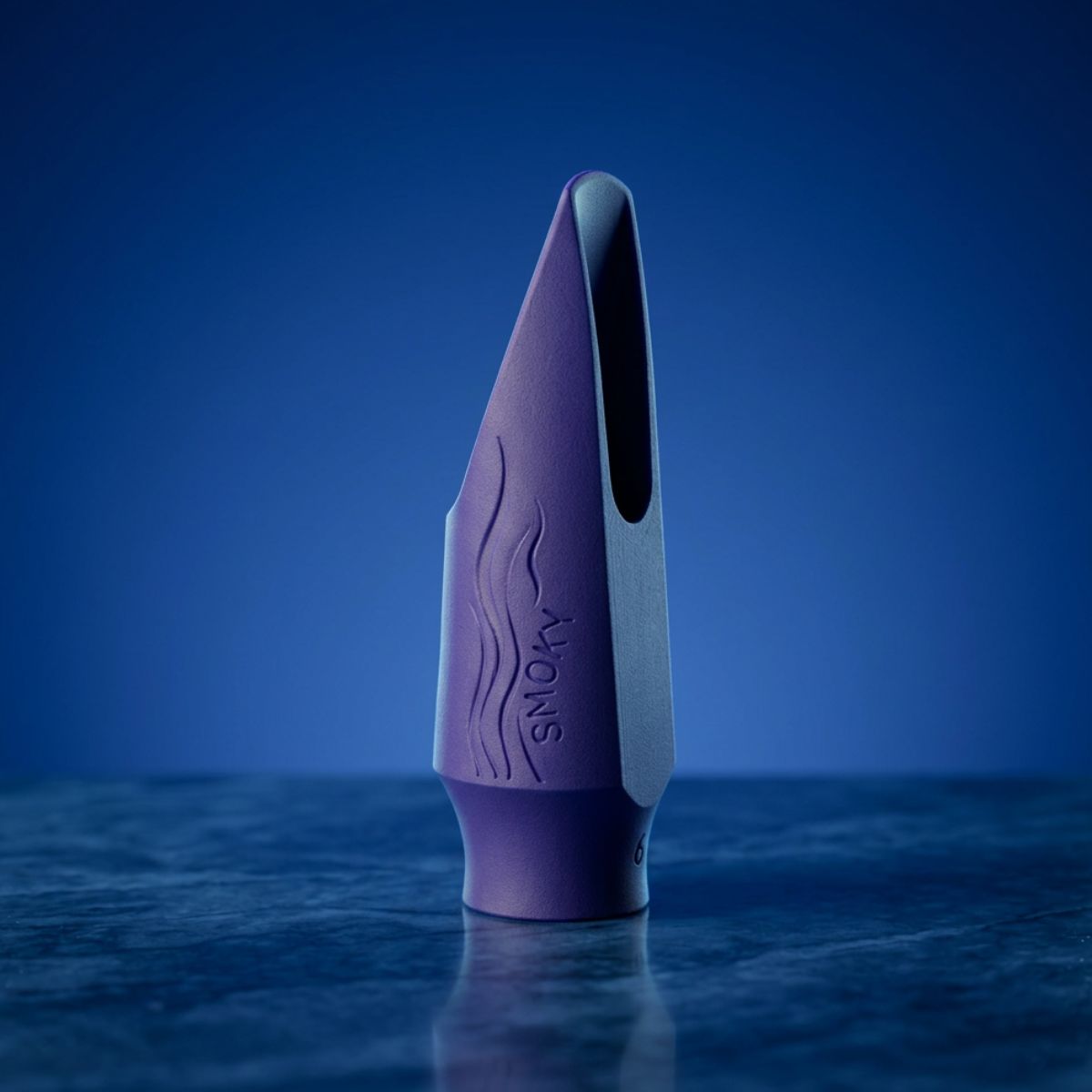
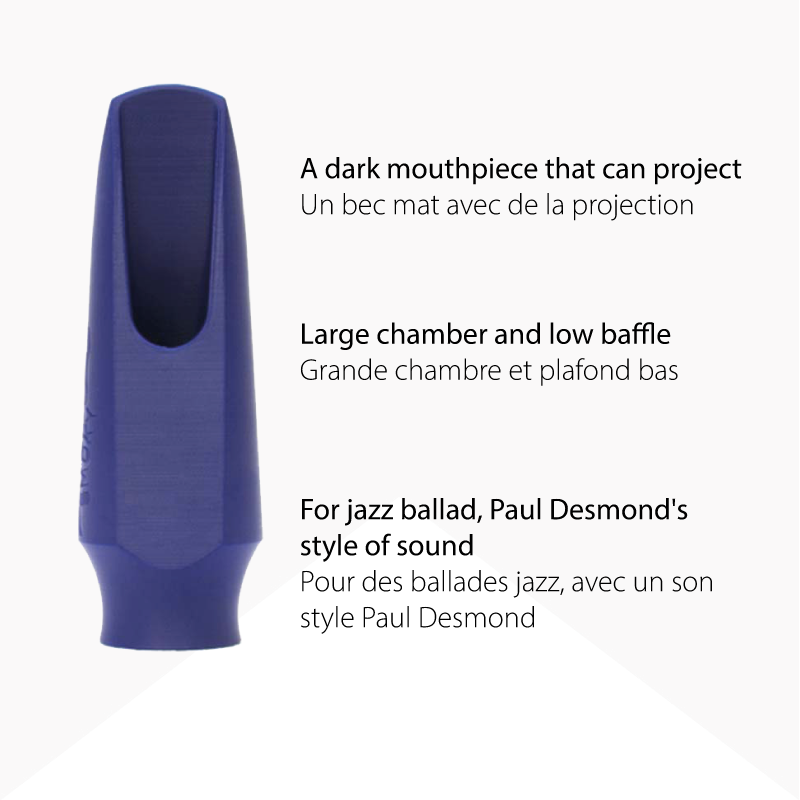
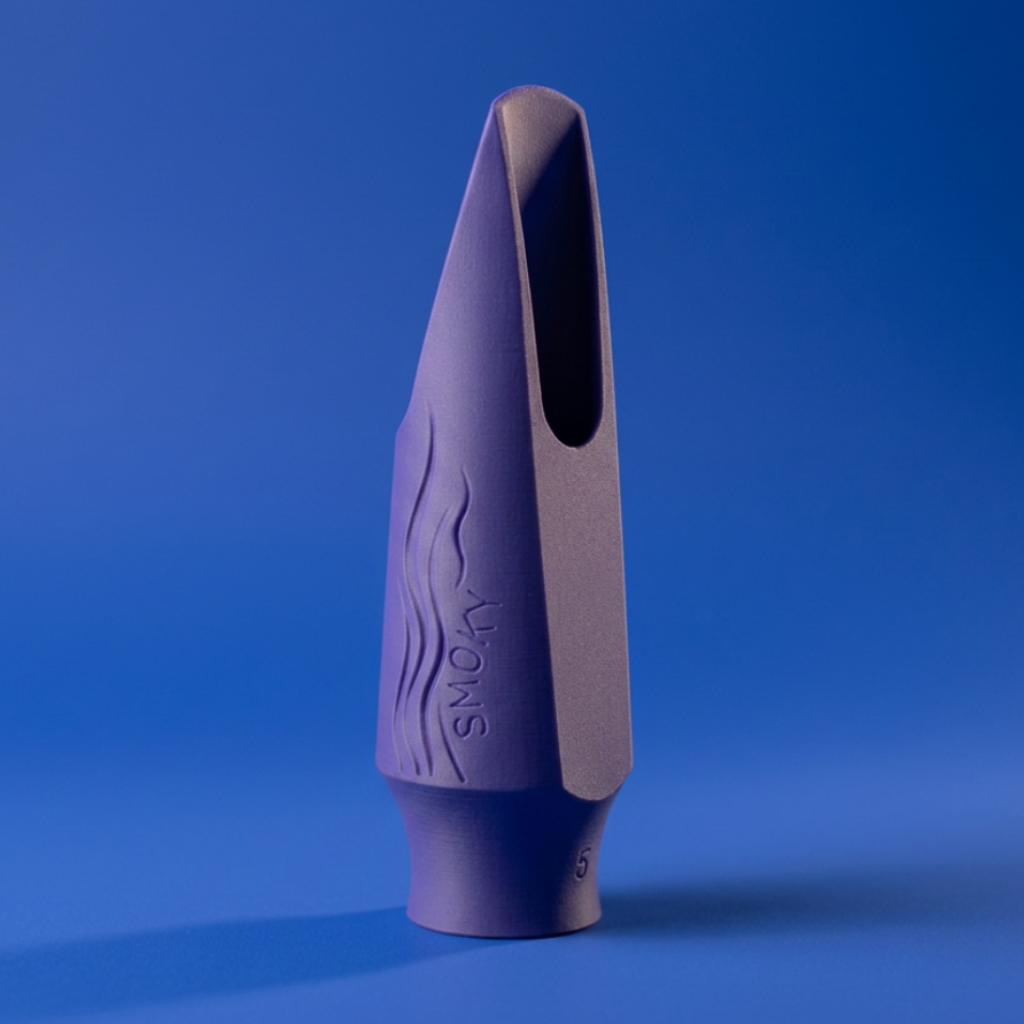
The curved baffle uses a spline to connect the tip to the chamber. It can be high or low, but even high it is not as powerful as a step or circular baffle. It is mostly used for dark or balanced mouthpieces, like the Smoky for alto.
Rollover baffle
We designed this baffle for Daro Behroozi's signature mouthpiece for tenor. Unlike the traditional rollover, ours has a small bump at the tip that adds punch. It can be almost as powerful as a high step baffle without being as bright, and it is much easier to control. A good choice if you are a beginner and want a powerful mouthpiece.
Spheric baffle
The spheric baffle is a straight line that ends with a small circular arc. We only use it on baritone for now, where it makes well balanced mouthpieces, like the Baritone Steady.
How baffle height affects your sound and playability
Once you have chosen a baffle shape, height is the fine adjustment. It changes how bright the mouthpiece sounds, how much power it gives and how much resistance you feel.
Keeping the same baffle shape, we can adjust the height: for example a broken baffle can be raised or lowered which allows us to play on the mouthpiece's brightness without drastically modifying the power, due to step.

A lower baffle will need more air volume. A very high baffle will result in a much more “free-blowing” mouthpiece, i.e one where the sound comes out directly without any resistance when the saxophonist blows. The mouthpiece then becomes more difficult to control and riskier, but it allows more freedom when it comes to effects such as bends, grawls…
Height never works alone. To keep the same feel of play, choose a slightly more open mouthpiece when the baffle is high, and a more closed one when the baffle is low. The chamber and the tip opening change the result as much as the baffle does.

Which baffle is best?
The choice of mouthpiece baffle will depend entirely on the sound you like. Despite everything we've said don't become to fixate yourself on a particular baffle, because other parameters such as the tip-opening, the mouthpiece chamber and the facing length will also have a strong impact on the color-tone.
The saxophone mouthpiece: Large or small chamber?
The saxophone mouthpiece tip opening
We even made a special video for you to summarize everything and listen to the results:
Here is a little summary of the main principles:
-
If you like a powerful and bright sound (think Sanborn or Maceo ...) avoid mouthpieces with low baffles.
-
To have the same feel of play, it is better to play with a slightly more open mouthpiece if the baffle is high, and more closed if the baffle is low.
-
You can have fun with resin or wax to tamper with your baffle to change the timbre/tone-color. But you will probably make the mouthpiece intonation too high. Be careful not to damage the mouthpiece!
FAQ: saxophone mouthpiece baffles
What does a baffle do on a saxophone mouthpiece?
The baffle is the part of the mouthpiece just behind the reed. The air vibrated by the reed hits it directly, so its shape and height largely decide the brightness and the power of the sound, and the comfort of play, especially the resistance of the mouthpiece.
Does a higher baffle make a mouthpiece brighter?
In general, yes: the closer the baffle is to the reed, the more powerful and bright the sound. A high step baffle gives a metallic, aggressive tone, while a straight baffle gives a dark, soft sound. It is a simplification: the tip opening, the chamber and the facing length also shape the tone.
Can I change the baffle of my mouthpiece?
Some saxophonists add resin or wax inside the mouthpiece to raise the baffle and change the tone color. But this reduces the air volume inside the mouthpiece, which usually makes the intonation too high, and you can damage the mouthpiece. At Syos, when we change a baffle, we compensate by adjusting the length of the shank: read why saxophone mouthpieces have different lengths.
Which baffle is best for jazz?
Higher baffles, which give a brighter and more powerful sound, are mostly used for pop, rock and funk. For jazz, there is no single best baffle: choose according to the sound you want. A low or medium step baffle gives a dark or balanced tone, while a rollover baffle gives power without too much brightness and is easier to control.
Conclusion
The baffle shape sets the character of your sound, its height fine-tunes it, and the chamber and tip opening complete the picture. To see every baffle we use at Syos and what it does to the sound, read our full guide to Syos baffles, or browse our saxophone mouthpieces.