





The history of the saxophone is filled with legendary names. Marcel Mule, Stan Getz, Charlie Parker. Almost all of them have one thing in common: they are men. Yet despite these challenges, women have played an essential role in shaping the instrument’s history, from the earliest days of the classical repertoire to today’s thriving jazz scene. Few figures illustrate this better than Elise Hall.
Elise Hall, Saxophone Queen (Public Domain / Elise Hall Saxophone Quartet)
“Humble” Beginnings
Elise Hall (1853–1924), born Elizabeth Boyer Swett Coolidge, was one of the most important early champions of the concert saxophone. She was born in Paris in 1853 to a wealthy Boston family and later became widely known simply as Elise Hall. In 1879 she married the physician Dr. Richard J. Hall, and the couple lived first in New York City before settling for a time in Santa Barbara, California. It was during this period that Hall began learning the saxophone, quickly developing a deep enthusiasm for the instrument and for musical life more broadly. A commonly repeated story claims that Dr. Hall encouraged her to take up a wind instrument as a way of counteracting hearing loss while allowing her to continue pursuing music. However, research by saxophonist and scholar James Noyes suggests a more nuanced explanation. Although Hall did experience hearing loss later in life, contemporary accounts from the period make little mention of it, and Noyes argues that her interest in the saxophone likely reflected the broader late nineteenth-century fascination with the instrument rather than a prescribed medical remedy. After Dr. Hall’s death in 1897, Hall had the financial independence and personal freedom to devote herself more fully to music. Combined with the resources of her family background, this independence allowed her to begin supporting new repertoire for the saxophone at a moment when the instrument had almost none.
The American Dream
At the turn of the twentieth century, the saxophone was still widely regarded as a novelty within classical music. Although Adolphe Sax had designed the instrument with orchestral use in mind, it struggled to gain acceptance in concert halls and symphonic repertoire. Works for saxophone soloist and orchestra were almost nonexistent, and the instrument remained largely associated with military bands and emerging popular styles. Hall’s decision to pursue the saxophone was therefore unusual, particularly for a woman at the time. In English-speaking societies of the late nineteenth and early twentieth centuries, ideals of bourgeois womanhood centered largely on domestic life. As sociologist Anna Bull notes in her essay Class, Control and Classical Music, upper-class women were expected to focus on childrearing and household duties, while musical accomplishment was typically encouraged only as a form of recreation or entertainment within the home. Social conventions also discouraged women from playing wind instruments altogether, which were often considered inappropriate for female performers.
But Hall’s circumstances allowed her to move outside these expectations. Her wealth freed her from the financial pressures faced by most professional musicians and allowed her to pursue music at a serious level without relying on it for income. In doing so, she was able to sidestep many of the social constraints that limited women’s public musical activity. At the same time, her interest in the saxophone was not entirely isolated. Scholars such as Thomas Smialek, L.A. Logrande, and Holly Hubbs have shown that some of the earliest prominent saxophone soloists in the United States were women, though they were typically active in popular musical genres rather than in classical concert life. As the instrument later became increasingly associated with masculine imagery and male performers during the jazz era of the 1920s and 1930s, many of these early contributions by women gradually faded from historical view.
After the death of her husband, Hall moved to Boston and quickly reestablished herself within the city’s cultural elite. In 1899 she helped reorganize the Boston Orchestral Club, which had previously functioned as a largely amateur ensemble composed of upper-class members. Under Hall’s growing leadership, the organization evolved into a far more ambitious musical institution. Rather than focusing primarily on established repertoire, the ensemble began performing contemporary works, and particularly by French composers. Local media soon treated the group as Boston’s “second orchestra,” and the club gave the Boston and American premieres of several major works, including Debussy’s Prélude à l'après-midi d’un faune, Berlioz’s Hamlet, and Mussorgsky’s Night on Bald Mountain.
Recognizing the near absence of serious repertoire for the saxophone, Hall also began commissioning new works from prominent composers, many of whom had won the prestigious Prix de Rome. Over the next two decades she commissioned more than twenty pieces, becoming the dedicatee of works by composers such as Claude Debussy, Vincent d’Indy, André Caplet, Florent Schmitt, Charles Martin Loeffler, and Paul Gilson. Through these efforts, Hall significantly expanded the classical saxophone repertoire and helped establish the instrument as a viable presence in concert music.
Debunking Naysayers

Elise Hall following performance with the Boston Symphony Orchestra
Because Elise Hall commissioned so many works for the saxophone, she is sometimes remembered primarily as a patron rather than as a performer in her own right, but contemporary reviews from the period tell a different story. Critics across the United States and Europe repeatedly acknowledged Hall’s musical abilities, even when their commentary sometimes reflected the gender biases of the era.
Early performances with the reorganized Boston Orchestral Club were met with notable praise. At the ensemble’s first concert on January 31, 1900, Hall was singled out for her saxophone solo in Bizet’s L’Arlésienne Suite No. 1. The Musical Courier reported that “Mrs. Hall played the saxophone solo admirably.” Only a few months later, another reviewer noted that “of the soloists, Mrs. Hall with her warm, authoritative playing, and her unusual, beautiful instrument, led.” Chamber performances received similar recognition. Writing about a March 1903 concert in the Boston Evening Transcript, one critic praised “the breadth and musical beauty of her phrasing” and the “wonderful sonority of her instrument.”
French critics were often less generous in tone, but even their skepticism rarely questioned Hall’s musicianship. When she performed in Paris on May 17, 1904 at the Société Nationale de Musique (one of the most prestigious and conservative musical institutions in France), the novelty of an American woman playing the saxophone drew pointed commentary. One reviewer described the spectacle as unusual for a lady but still acknowledged that Hall performed Vincent d’Indy’s chorale “very well, with a beautiful sound.” At the time, the Paris Conservatory had never admitted a woman to its wind instrument classes, effectively barring women from professional careers as brass or woodwind players.
Despite these barriers, Hall continued to earn strong reviews. Covering a 1905 concert of the Longy Club featuring premieres by Georges Longy and André Caplet, the Boston Evening Transcript wrote that Hall played “admirably indeed, with very beautiful tone, with frequent exquisite phrasing, and often with extreme brilliance of execution.” The reviewer added that if the saxophone were ever accepted as a chamber instrument, “it will be largely due to Mrs. Hall.”
Other publications were even more emphatic. The journal Paris Musical et Dramatique described Hall as a “remarkable artist” and an “incomparable virtuoso,” while critic Juliet Torchet of Le Guide Musical wrote that “her virtuosity is undeniable,” praising the purity of her style and the soft yet full tone she drew from the instrument.
Her reputation as a performer was further underscored in 1910 when she appeared with the Boston Symphony Orchestra after its saxophonist fell ill shortly before a performance. Hall stepped in to play the demanding solo passages from Bizet’s L’Arlésienne, performing them “without the slightest hesitation” and receiving warm applause. The event even prompted an editorial question in The New Music Review and Church Music Review: if women were proficient musicians, why should they not appear in major orchestras?
Taken together, these accounts complicate the idea that Hall’s importance lies only in her financial support of new music. While her patronage was extraordinary, contemporary critics repeatedly recognized her as a skilled and expressive saxophonist whose performances helped demonstrate the instrument’s artistic potential, and women's potential on the classical concert stage.
Claude DeBussy
Debussy’s Rhapsody: An Audacious Commission
Among Hall’s most famous commissions was a request made in 1901 to Claude Debussy. At the time, asking a composer of Debussy’s stature to write a concerto-like work for saxophone was bold, ambitious. Quite a reach. The instrument was still largely associated with military bands rather than orchestral concert halls, and few major composers had shown interest in writing for it. Debussy, who was struggling financially at the time, ultimately accepted the commission, though the process proved to be a long and reluctant one. In private correspondence with his first wife, Lilly, Debussy expressed clear irritation with the request, referring to Hall dismissively as “the Saxophone Lady” and complaining that she haunted him like an apparition. In one particularly biting remark, he mocked the idea of a woman devoted to the instrument, describing her as “a woman in love with a saxophone, whose lips suck at the wooden mouthpiece of this ridiculous instrument.” The remark reveals not only Debussy’s impatience with the commission, but also the broader skepticism and cultural discomfort that surrounded the saxophone at the time.
Debussy eventually delivered a piano reduction of the piece in 1908, titled Rapsodie pour orchestre et saxophone, but never completed the orchestration before his death in 1918. The task was later taken up by his friend and colleague Jean Roger-Ducasse, who finished the orchestration using Debussy’s sketches. The work received its world premiere on May 14, 1919 at the Salle Gaveau in Paris, performed by saxophonist Pierre Mayeur under the direction of André Caplet.
Today, Debussy’s Rhapsody for Saxophone and Orchestra stands as one of the cornerstone works of the classical saxophone repertoire, representing both Debussy’s distinctive musical voice and the lasting impact of Elise Hall’s vision.
Rediscovering Elise Hall’s Influence
Musicologist and saxophonist Dr. Paul Cohen later uncovered additional works connected to Hall while researching archives at the New England Conservatory and the Library of Congress. Among the discoveries was Divertissement Espagnol by Charles Martin Loeffler, written for Hall in 1901. The work was rediscovered in the 1980s and re-premiered for the first time since Hall’s own performances in the early twentieth century.
Cohen also uncovered Ballade Carnavalesque, another Loeffler composition written for flute, oboe, bassoon, alto saxophone, and piano. The piece was particularly notable because it treated the saxophone as a full chamber music partner instead of just a color instrument used sparingly for effect.
As Cohen later observed, the legacy of the saxophone is ultimately determined by the music written for it. In that sense, Hall belongs to a very small group of figures whose contributions fundamentally shaped the instrument’s development.
A Legacy That’ll Surely Continue to Grow
Music Scholar (PhD) Paul Cohen: “She was not a teacher and she had no intention of being a teacher. She was a player; a player who wanted to play with her friends in the Orchestral Club so that she could enjoy the expression of performing music. She had no students and probably would not have accepted them if they had asked her. She didn’t have a need to teach and she did not have a need to play in any kind of commercial venue or to be hired to play. She just wanted to play. So that’s another reason that there was no legacy for her, because, there was no legacy for her. When she passed away, everything just stopped. There was nobody picking up the mantle for that.”
Despite Elise Hall’s extraordinary impact on the development of the classical saxophone repertoire, her legacy did not immediately continue after her death. As saxophonist and historian Dr. Paul Cohen has noted, Hall was not interested in establishing a pedagogical lineage or building a professional career in the conventional sense. In many ways, Hall’s motivations set her apart from the professional musicians of her time. A Francophile deeply enamored with European art music, she nevertheless embodied a distinctly American spirit of cultural entrepreneurship. At a moment when the saxophone had almost no place in classical repertoire, Hall used the relative openness and social mobility of the United States to pursue an ambitious vision: to build a body of serious concert music for the instrument. Through commissions, performances, and collaborations with leading composers, she helped create the very repertoire that later generations of saxophonists would inherit.
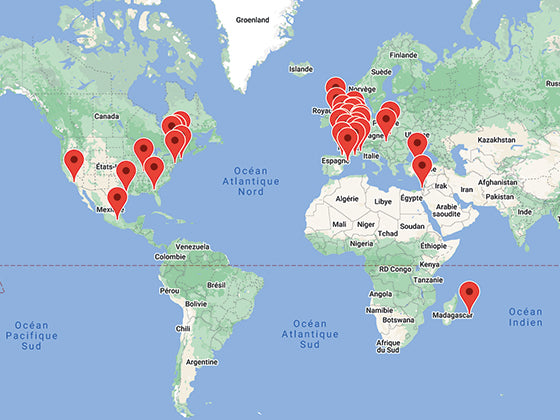
More than a century later, the reverberations of that vision are still being felt. In 2024, for example, French saxophonist Nicolas Prost organized an international concert series dedicated to women in the world of saxophone, with performances across Europe and the United States in cities including Paris, Bordeaux, and Sicily. The project paid tribute to Elise Hall while highlighting the contributions of women who continue to shape the instrument today.
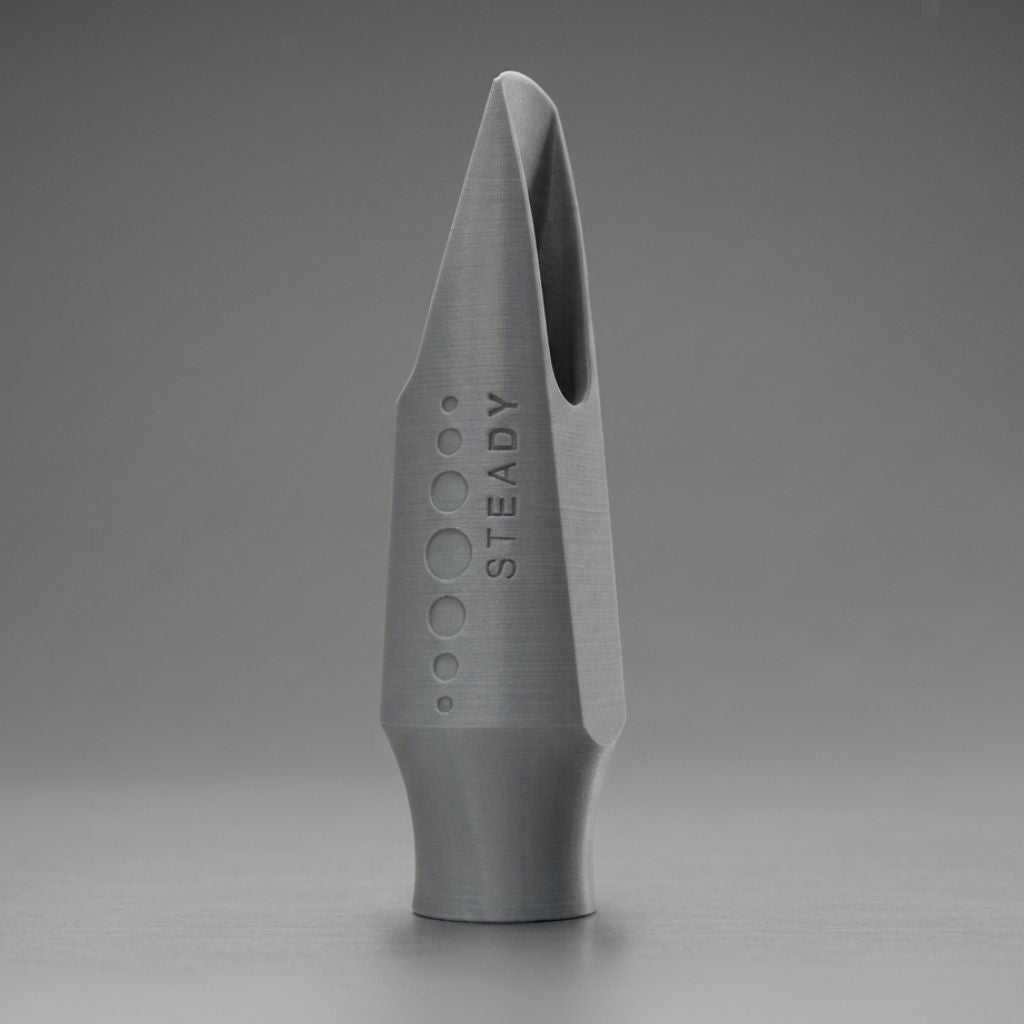
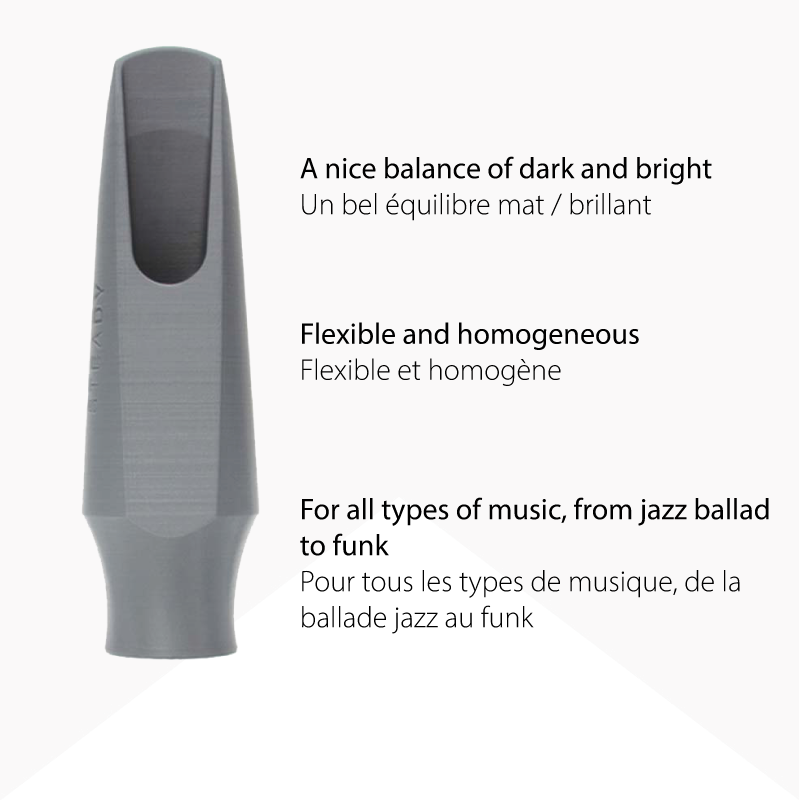
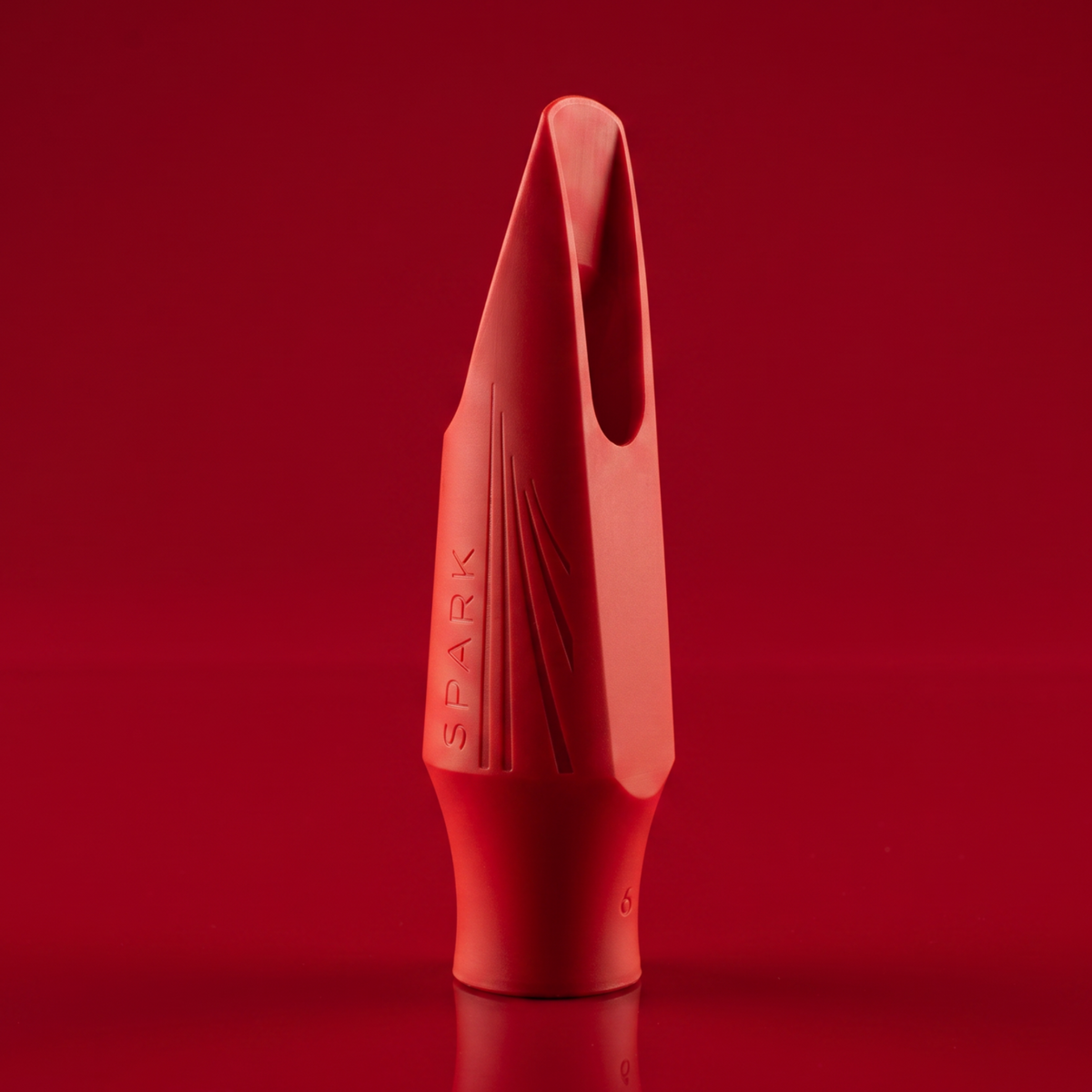
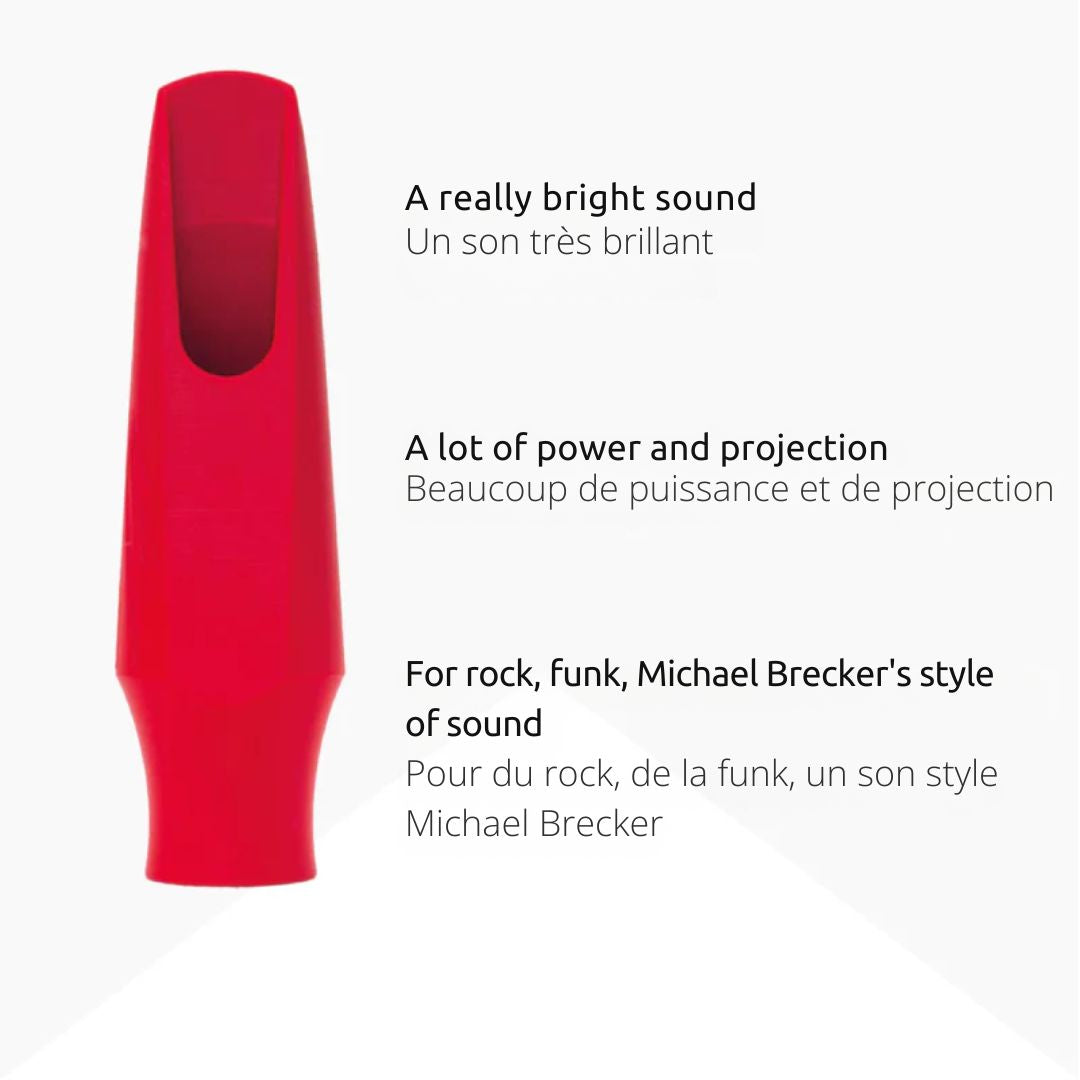
At a time when the saxophone had little place in the classical concert hall, Elise Hall refused to accept the instrument’s limitations and instead helped expand what it could become. That same spirit continues today. SYOS, founded in Paris and shaped by an international perspective, including my time studying in Montreal, reflects a similar exchange between French tradition and North American innovation. Like Hall, SYOS approaches the saxophone with deep respect for its history while exploring new materials and ideas to move the instrument forward, guided by craftsmanship, care, and community.